.png?width=680&height=1008&name=pole-no-bg%20(1).png)
.png?width=500&height=500&name=Thought%20Leadership%20Template%20(10).png)
BEAD Deployment Challenges: How Municipalities Stay in Control
How Justin Conn's team at ADB catches quality at every step instead of at the end, and what that discipline does for the crews who build from their packages.
In joint use, somebody can drop three thousand poles on your desk tomorrow. The ADB engineering team takes that in stride, and hands the finished work to construction crews who can build from it without chasing answers.
The speed behind that comes from process rather than heroics. A single engineer working fifty poles used to take most of a week:
“One guy on 50 poles could easily be a five to seven day process. Right now, we could spend about two days in the office and have it run through the PE.”
Justin Conn, Manager of Engineering Operations, ADB Companies
Fifty poles that arrive in the morning are usually turned back around by the end of the next day.
Justin is Manager of Engineering Operations at ADB Companies, a national turnkey
infrastructure firm founded in 1995 and headquartered in Pacific, Missouri, doing wireline, wireless, engineering, and technology work and known nationally for a safety-first culture. ADB has a construction arm, which means Justin sees what happens to a package after it leaves his design team.
ADB's use of Katapult Pro pre-dates Justin's time with the joint use group. Back then the team managed the joint use application process for a utility and ran all of its wireless applications, doing pole loading analysis on small cell work before that was common practice. Their engineering approach was ahead of its time, but their tools were not. Field work ran on hot stick measurements and hand notes, and the real bottleneck was getting that data back into an engineer's hands with everything they needed to do the analysis. Information lived wherever it had landed.
What the team wanted was one place where all of it lived, so an engineering manager could check a design and a construction crew could look at the photos and see what they were walking into. That is what led them to Katapult Pro. The benefit of a single source of truth is especially clear when you zoom out. Justin still opens small cell jobs his team collected in 2016 and 2017. When a carrier came back last year to add 5G to sites that had been built for 4G, his team collected fresh data and compared it against the original record to confirm the new antennas would fit.
Ask Justin what another engineering operations manager should learn from the ADB approach, and he will point you to process over platform.
“Pay attention to the details from the start. Every small detail in the beginning has very big safety and design implications at the end.”
In practice, that starts in the field. ADB's crews enter existing communications attacher details on a pole, top down, as an attribute: fiber company A, cable company B, and so on. It's a small workflow change, but it means attachments come back from the field already identified.
“We never want something to get to our engineers and they're trying to trace something or load something out and now they're having to go back and check the broadband map to see who's on the pole.”
Crews upload every evening, so a day that ends with 75 poles collected becomes work someone can pick up the next morning. From there the work moves through a dynamic review structure.
“By the time something gets through our PE, in all honesty, there's probably about eight different QA/QC stages.”
Design staff import the data, update trackers, and pin the map before anything reaches the field, and that gets checked before crews roll. It gets checked again when the data comes back, again at calibration, and again at every step after, and each stage carries a sign-off sheet. Justin front-loads all of that because of arithmetic he has watched play out in loading software many times over.
.jpg?width=2000&name=IMG_7417%20(1).jpg)
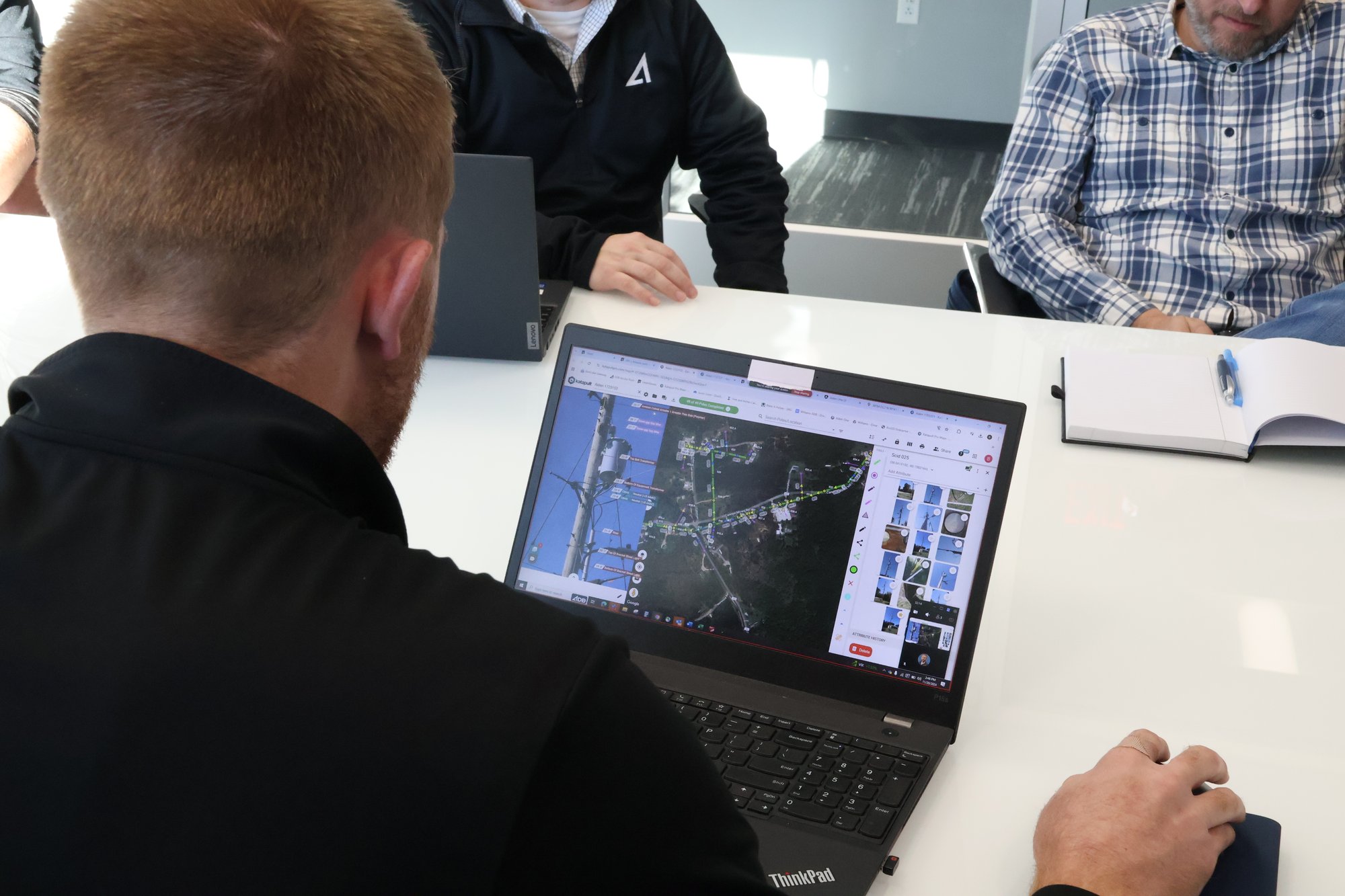
ADB team member reviewing pole data in Katapult and SPIDA
“If you mess up in the beginning, it gets harder to fix and worse down the road.”
Saving quality control for the end carries a second cost that is easier to miss. Under a deadline, a reviewer who finds a problem at the end is just fixing it and pushing it through, which means the person who created it never learns, and the same problem lands again on the next set of tickets.
“It gives you a learning moment for the person you're working with. That's what has allowed us to be efficient and quality at the same time.”
Because ADB also handles construction, Justin gets something most engineering groups never get, which is honest feedback on the package itself. His approach is to send more than the crew asked for to make sure they don’t end up stuck when they arrive on site.
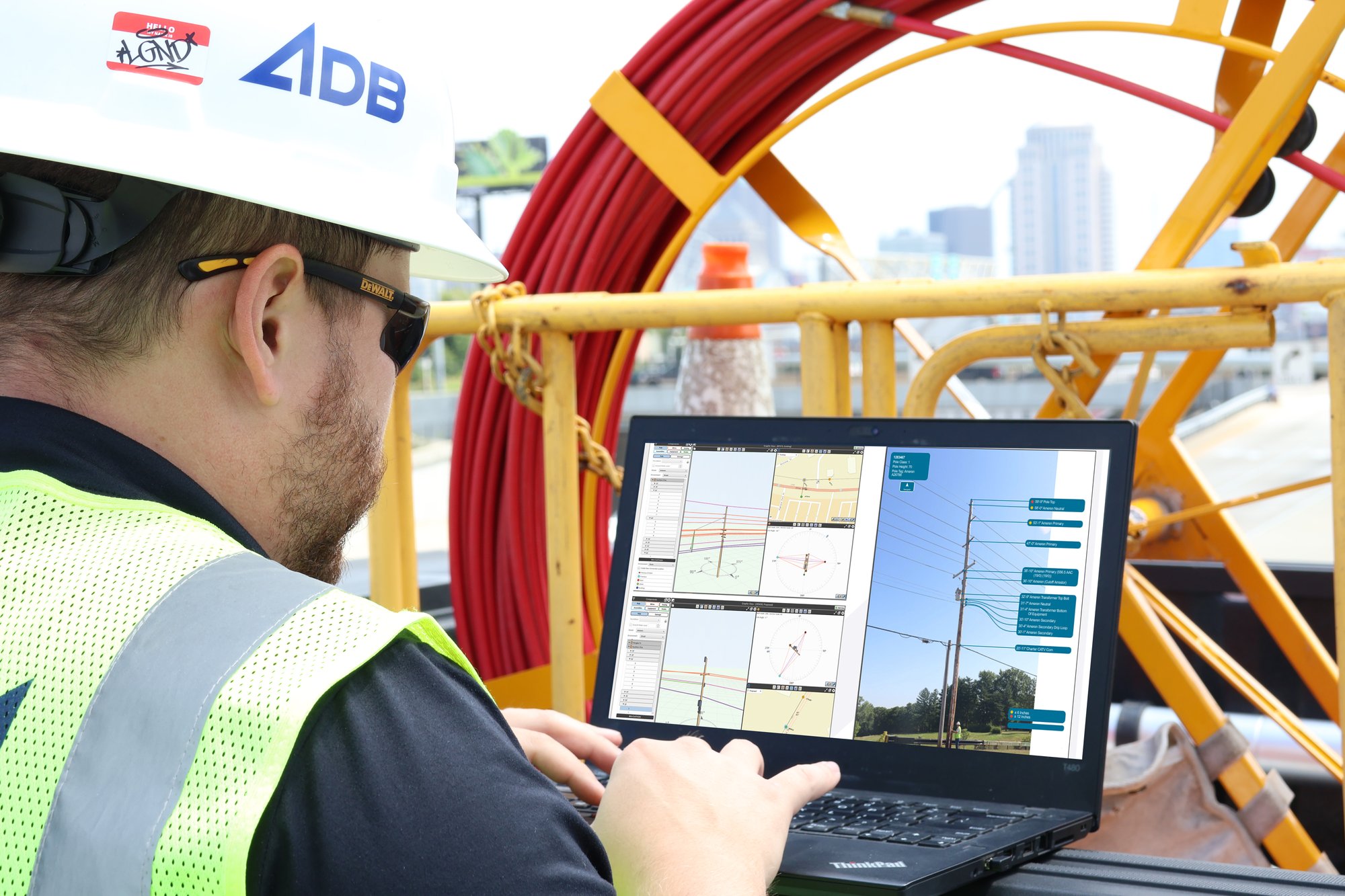
Photo forms go out with the package. So do KMZ files with every photo included, so a crew can open the file, drop into street view, and see where the safety hazards are and where flagging will need to go. Make ready reports stay short and precise. A map set gets built for the project. The result is a crew that arrives knowing what it is walking into rather than driving to a GPS point and working it out on site, which cuts out most of the back and forth and keeps people safer while they are out there. That safety thread runs through how the whole operation is set up.
“Here at ADB safety is always number one no matter what we do, and we'll never send one person out by themselves.”
Full data collection runs with a two-person crew, without exception. Crews hike into the woods and work along roads, and one person alone who trips and breaks an ankle with a dead phone has no way out.
If you run an engineering group that hands work to construction crews, you know what a missed detail costs once it is downstream: the call from the field, the redesign, the truck that has to go back out.
Justin's answer is to spend that effort upfront, at every stage, where it is cheapest to fix, and to make sure whoever touched it last put their name on it.
We built Katapult Pro to support work like this across the country, and it's successful because Justin's team does the hard part of setting up their process, holding their standard, and having each other's back as they tackle the industry's toughest challenges.
Talk to our team about building your engineering program on Katapult Pro today.