
.png?width=680&height=1008&name=pole-no-bg%20(1).png)
.png?width=500&height=500&name=Thought%20Leadership%20Template%20(10).png)
BEAD Deployment Challenges: How Municipalities Stay in Control
If you've ever driven down a street during a power outage and wondered why some neighborhoods have lights while others sit in the dark, you've witnessed distribution design at work. Those decisions about load balancing, redundancy paths, and equipment placement have an impact on which lights stay on during the next heat wave or storm.
For most people, power is invisible until it stops working. But for distribution engineers, every design choice carries real consequences for grid reliability, customer safety, and your utility's reputation when extreme weather hits.
This guide breaks down the essential principles of distribution design, explains common challenges engineers face, and shows how modern tools are helping utilities design and build more reliable systems.
What is Distribution Design?
Distribution design is the engineering process of creating electrical systems that deliver power from distribution substations to our communities. Think of it as the final mile of electricity delivery, where power steps down from transmission-level high voltage (115kV to 765 kV) to sub transmission-level voltage (34.5kV to 69V) to distribution levels (2.4kV to 34.5kV) and ultimately to service voltages (120V/240V) at our homes and businesses.
Distribution engineers calculate load requirements, design redundancy paths, specify equipment, and ensure systems meet safety standards while minimizing outages. Using specialized power system design tools like ArcFM, engineers create designs that balance reliability, cost, and the ability to adapt to future demand growth.
The distribution system is where the electrical grid gets complicated. Unlike transmission lines that carry massive amounts of power across long distances in relatively simple configurations, distribution networks branch into thousands of individual paths serving everything from single homes to massive industrial facilities. Every branch point, every transformer, every protective device represents a design decision that affects who has power if things go wrong.
Why Distribution Design Matters for Reliable Power
Power outages can be chalked up to many causes: severe weather, vegetation issues, vehicle collisions. The vast majority of outages are due to the weather.
But sometimes, high demand during heat waves or cold snaps when everyone cranks up the AC or heat can overburden the grid and create failures. With data center and EV charging growth projected to increase total energy demand by roughly 500% in the coming decade, these failures will become more common.
One of the primary goals of distribution design is avoiding outages completely, and make the unavoidable ones as infrequent and brief as possible.
When distribution systems are designed well, customers barely notice the infrastructure keeping their lights on. When systems are designed poorly or can't adapt to changing conditions, you see cascading failures, extended outages, and communities losing critical services.
The quality of distribution design directly determines:
Grid reliability during normal operations and extreme weather
Safety for both utility workers and the public
System efficiency and energy loss across the network
Flexibility to accommodate community growth, EVs, solar integration, and changing load patterns
Cost effectiveness of operations and maintenance over decades
Modern distribution design is more challenging than ever. Distributed Energy Resources (DERs) like rooftop solar create bi-directional power flow that traditional systems weren't designed for. Electric vehicle charging creates new peak demands. Customers expect utility-grade reliability for internet-dependent work and medical devices. Smart grid technologies promise better visibility but require infrastructure investment.
Engineers must design systems flexible enough to meet diverse needs without overbuilding expensive capacity that sits idle. The better the design, the less unexpected maintenance required and the more resilient the system when stressed.
Core Principles of Distribution System Design
The process of designing distribution systems has evolved significantly, but several fundamental principles guide every project.
Load Balancing Across Feeders
Load balancing ensures the even distribution of electricity across the electrical distribution system. In a three-phase system, electricity flows through three separate conductors. When loads are unbalanced between phases, serious problems emerge.
Uneven loads create multiple issues:
Equipment stress. Excess load on one phase forces transformers and conductors to work harder, damaging assets and shortening their service life.
Energy waste. Imbalances create line losses across the system, wasting electricity and increasing costs.
Reliability problems. Overloaded phases trip protective devices more frequently, interrupting service for customers.
Safety hazards. Severe imbalance can create voltage issues and, in worst cases, cascading failures across the system.
Traditional load balancing relied on design-time calculations and periodic manual surveys. Engineers would estimate loads, balance them across phases on paper, and hope reality matched their assumptions.
Modern challenges are making this harder. DERs and EVs change peak patterns and loads throughout the day in ways that were unpredictable even five years ago. A neighborhood might have been perfectly balanced at design time, but when 40% of homes add rooftop solar and 30% buy EVs, load patterns transform completely.
Smart technology is starting to address this through real-time load balancing that automatically redistributes power based on current conditions. More engineers now need monitoring systems providing real-time data on power flow, voltage levels, and loading across feeder phases to detect imbalances before they cause problems.
The goal isn't perfect balance at every moment (impossible with changing loads) but rather ensuring no phase approaches its limits while others operate well below capacity.
Redundancy Planning for Critical Systems
Distribution systems need backup plans. Even the best designs experience failures: storms damage lines, transformers fail, vehicle strikes take down poles, equipment reaches end-of-life unexpectedly.
Redundancy means building alternate paths for power to flow when primary routes fail. This might include:
Parallel feeders serving the same area from different substations
Tie switches allowing quick transfer of loads between feeders
Multiple transformers serving critical facilities
Automatic transfer systems that switch to backup power sources within seconds
Not all areas need the same level of redundancy. Critical systems serving hospitals, emergency services, water treatment facilities, and public safety infrastructure need higher redundancy levels than residential neighborhoods. A tiered approach helps engineers prioritize based on customer impact.
Smart Grid Technology Integration
Smart technology is transforming how distribution systems operate and respond to problems. Advanced systems like Automated Metering Infrastructure (AMI), SCADA monitoring, and Distribution Management Systems (DMS) help avoid outages and reduce their duration by adjusting supply based on real-time feedback.
When electricity to one feeder goes out, smart switches can automatically reroute power through alternate paths, often before customers even notice the primary failure. Monitoring systems can predict equipment failures days or weeks ahead, allowing engineers to schedule maintenance during low-demand periods rather than responding to emergency failures.
Key smart grid technologies reshaping distribution design:
Automated switches and reclosers reroute power without human intervention. When a line fault occurs, the system isolates the problem section and restores power to unaffected areas within seconds. What used to require truck rolls and manual switching now happens automatically.
Real-time monitoring provides visibility into voltage, current, power factor, and equipment condition across the entire distribution network. Engineers can spot developing problems (like failing transformers showing thermal stress) before they cause outages.
Advanced Distribution Management Systems coordinate all these smart devices, running power flow analysis in real-time and optimizing operations automatically. When solar generation spikes during the day or EV charging surges in the evening, the DMS adjusts voltage regulation and capacitor banks to maintain power quality.
Integration with DERs is becoming essential. As more customers install solar panels, battery storage, and generators, the distribution system must coordinate bi-directional power flow. Smart inverters can provide grid services like voltage support and frequency regulation.
The challenge is integrating these technologies with legacy infrastructure. Most utilities have decades-old equipment that wasn't designed for two-way communication or remote control. Distribution engineers must design systems that bridge old and new, upgrading infrastructure incrementally without requiring complete replacement.
Another consideration: cybersecurity. Connected systems create attack surfaces that didn't exist in air-gapped analog infrastructure. Engineers must design with security layered throughout, not bolted on afterward.
Smart technology is making redundancy more efficient and cost-effective over time. What used to require expensive duplicate infrastructure can sometimes be achieved through better visibility and faster automated response to problems.
The Distribution Design Process: Step-by-Step
While every utility has specific procedures, distribution design generally follows this workflow:
1. Load Analysis and Forecasting
Analyze current demand and project future load growth. Consider existing customer usage, planned developments, economic trends, and technology adoption (EVs, heat pumps, etc.). Determine peak demand and load diversity factors.
2. Preliminary Route Planning
Identify where new infrastructure is needed. Consider right-of-way availability, geographic constraints, connection points to existing systems, and customer locations. Develop concept-level single-line diagrams showing major components.
3. Equipment Specification
Select appropriate conductor sizes, transformer ratings, protective devices, and voltage regulation equipment based on load calculations. Consider future capacity needs, standardization across the utility, and equipment lead times.
4. Detailed Engineering
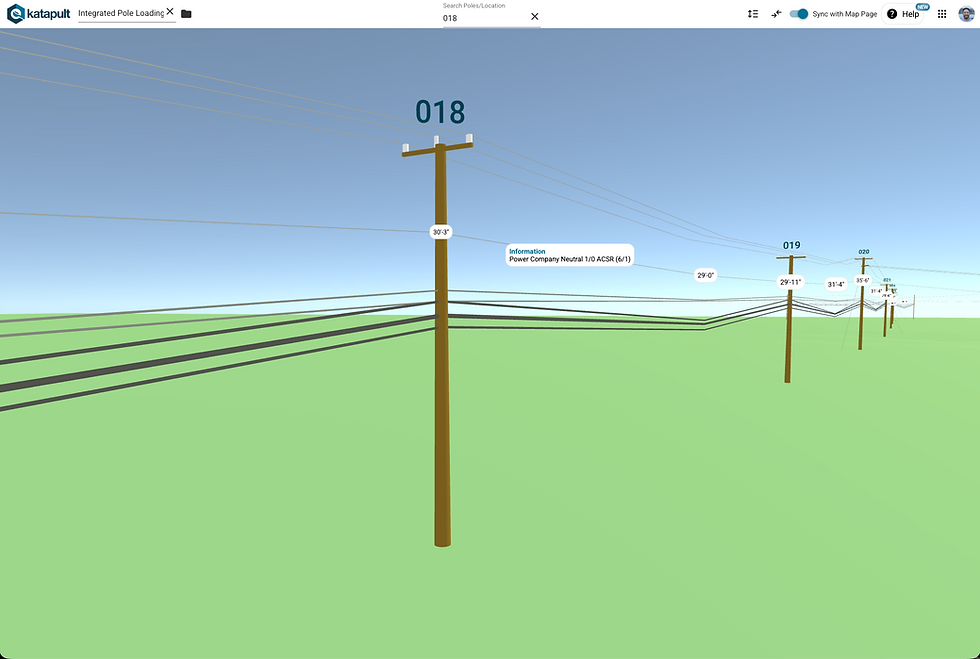
Create construction-grade drawings showing exact pole locations, equipment mounting details, clearances, and specifications. Run load flow analysis, voltage drop calculations, short circuit studies, and protection coordination. Verify all clearances meet NESC requirements.
5. Review and Approval
Submit design for internal review covering engineering standards, cost estimates, constructability, and safety. Make revisions based on feedback. Obtain necessary permits and approvals.
6. Construction Documentation
Generate bills of material, work orders, and construction prints. Coordinate with construction crews. Track progress and resolve field issues.
7. As-Built Documentation
Document actual construction conditions, equipment installed, and any deviations from original design. Update GIS and asset management systems with final configuration. This step is similar to post-construction inspections in pole attachment workflows—verifying that what was designed actually got built.
The process typically takes 4-12 weeks depending on project complexity, though utility-specific procedures and approval workflows significantly impact timelines.
Software and Tools for Distribution Design
Distribution engineers rely on specialized software across the design workflow:
CAD Software for DraftingAutoCAD remains the standard for creating construction drawings, showing exact pole locations, equipment mounting, conductor routing, and clearance dimensions. MicroStation is common in some utilities.
Power System Analysis Software
Cymdist - Industry-standard for load flow, voltage drop, and fault analysis
Milsoft Windmil - Popular for distribution planning and operations analysis
CYME - Comprehensive power engineering software suite
OpenDSS - Open-source option for advanced modeling
These tools run complex calculations verifying designs meet electrical requirements, testing fault conditions, and optimizing voltage regulation strategies.
GIS and Asset Management Platforms
Geographic Information Systems track every pole, conductor, transformer, and device. Modern platforms like Katapult Pro integrate field data collection with asset records, enabling engineers to design based on actual conditions rather than outdated GIS data.
Engineers need current information about existing infrastructure when designing modifications or expansions. If your GIS shows a pole built in 1975 with specific equipment, but field conditions have changed through maintenance and attachments, designs based on outdated data will fail during construction.
Integration Capabilities
The challenge isn't choosing one tool, it's making multiple specialized tools work together. Engineers might collect field data in a mobile platform, perform calculations in power system software, create drawings in CAD, and document results in an asset management system. Data must flow between these tools without manual re-entry and format conversions that introduce errors.
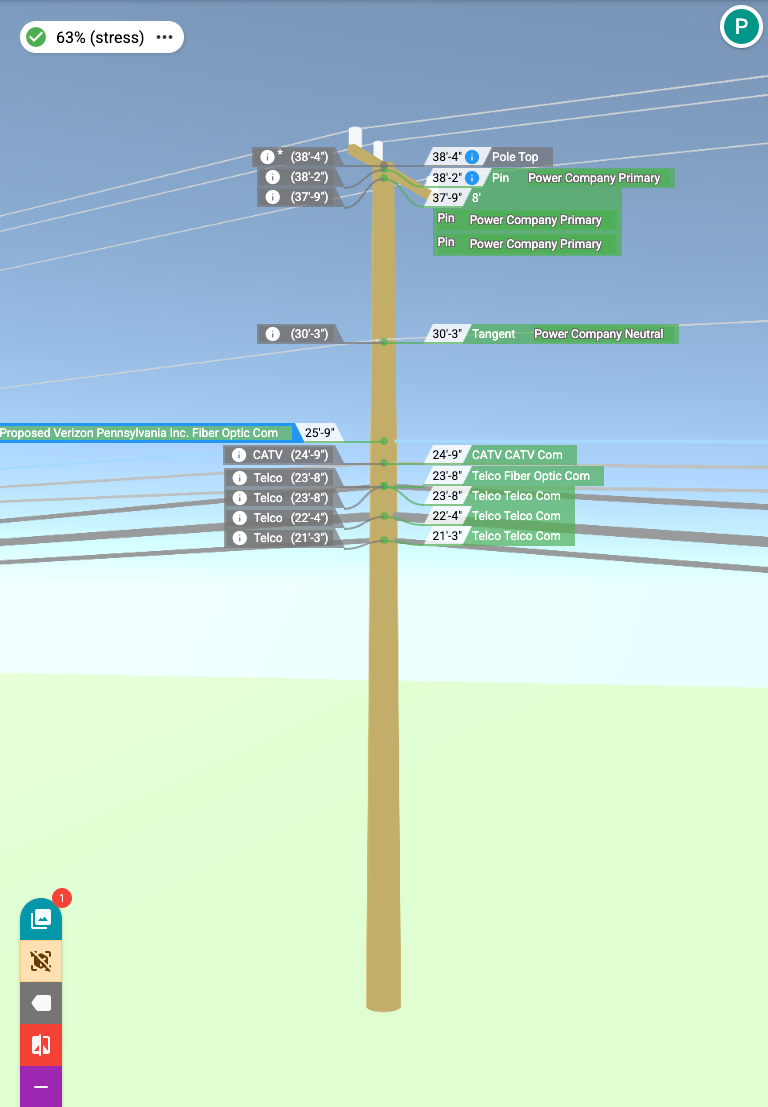
Katapult Pro addresses this integration challenge by connecting field data collection, asset management, and engineering deliverables in one platform. Field crews capture photo-based measurements that automatically populate design tools, ensuring engineers work from accurate current conditions. Export capabilities feed data to SPIDAcalc, Cymdist, and other analysis platforms in proper formats.
How Katapult Pro Supports Distribution Engineers
Distribution design creates complexity: aging infrastructure needs upgrading, DER integration demands sophisticated analysis, smart grid deployment requires data management, and utilities face pressure to improve reliability while controlling costs.
Katapult Pro helps utilities manage this complexity by connecting field conditions, asset records, and engineering workflows in one platform:
Accurate Asset Data
Engineers design based on actual pole specifications, equipment configurations, and field conditions captured through photogrammetry and mobile data collection. No more designing against outdated GIS records, then discovering reality doesn't match during construction.
Integrated Engineering Tools
Built-in NESC clearance checking, pole loading analysis, and make ready design capabilities let engineers validate designs in real-time. Export to SPIDAcalc, Cymdist, or other analysis platforms when needed for detailed studies.
Construction Package Generation
Automatically generate work orders, bills of material, and construction prints from engineering designs. Reduce manual document assembly time by 60-70%.
As-Built Documentation
Field crews update asset records directly from construction sites. Ensure GIS reflects actual built conditions, not just design intent. Close the loop between design, construction, and operations with post-construction inspection workflows.
Workflow Management
Track design projects from initial request through construction completion. Give stakeholders visibility into project status. Reduce coordination overhead and status update emails. For utilities managing joint use programs, this visibility extends to third-party attachment coordination as well.
As assets age and technologies evolve, having integrated software supporting the entire distribution lifecycle becomes crucial for utilities maintaining reliable grids.
Ready to Modernize Your Distribution Design Workflows?
Distribution design is complex enough without fighting your tools. Katapult Pro helps engineering teams design safer, more reliable systems by connecting field data collection, asset management, and engineering workflows in one integrated platform that plays nicely with your asset management systems.
Whether you're upgrading aging infrastructure, integrating DERs, or scaling your design capacity to meet growing demand, we can show you how utilities are eliminating the coordination overhead and data chaos that slows down distribution projects.