
On paper, a pole attachment audit looks like a no-brainer. You own the poles, you want to know who is on them and how many attachments each company has, so you hire someone to go look. In practice, these projects stall out constantly: in the RFI stage, in the RFP stage, or in a consulting conversation that quietly dies on the vine.
The reason usually has nothing to do with whether the audit is worth doing. Almost every pole owner would benefit from current attachment records. The reason is that the path to getting one approved, funded, and defended runs straight through four obstacles that have very little to do with poles and everything to do with budgets, agreements, and risk.
This post walks through the four reasons attachment audits stall before they start, then lays out an approach that sidesteps most of them. If you manage joint use for a pole owner, or you run these programs on a utility's behalf, this is familiar territory.
What a pole attachment audit actually is
A pole attachment audit is a project where a pole owner assesses every pole in a footprint to confirm who is attached, how many attachments each company has, and what type they are. You might also hear it called a joint use audit, or an attachments inventory. The goal is an accurate, current record of every 3rd party attachment on the system, which feeds rental billing, safety and pole loading decisions, and the everyday work of make ready engineering and pole replacements.
Why these projects stall before they start
The obstacles below are the four reasons we see attachment audits die on the vine, drawn from nine years of watching them try to get off the ground. None of them is about the engineering. They are all about getting a hard thing approved inside a regulated utility.
1. The accounting problem: O&M vs CapEx
The first obstacle is accounting, and it seems to be an unstated momentum killer for a wide variety of projects. For an investor-owned utility especially, an attachment audit is hard to classify as a capital expense. It does not build or replace an asset; it documents what is already there. That pushes it into the operations and maintenance budget, where it competes with vegetation management, inspections, and every other recurring cost. A one-time, system-wide audit with a large up-front number is a tough thing to defend in an O&M line, so it gets deferred year after year.
2. Ambiguity in the attachment agreements
The second obstacle is that the attachment agreements often have varying details about who pays for an audit or what happens with the results. Most joint use agreements were written to govern new attachments, not to fund a full inventory of existing ones. So when a pole owner starts asking who covers the cost of counting attachments, how back rental is calculated, and what an attacher owes once an unauthorized attachment turns up, the answers are murky. That ambiguity stalls the conversation before a budget is ever requested.
3. Defending the audit and actually collecting
The third obstacle is the worry that the effort will not pay off. Picture doing everything right: you get the budget approved, you confirm your rights under the agreements, you collect the data, you build the maps, and you bring the findings to the attachers. Then you land in a dispute over a few dollars per pole. Will those dollars actually come in, or will they get spent on attorneys before anyone sees a check? When the downside is a drawn-out legal fight over small per-pole amounts, the safe move can feel like delaying until a vendor brings a plan to solve it all.
4. Scope creep
The fourth obstacle is scope creep. Once you know a crew is going to visit every pole, the temptation is to collect everything while they are out there: confirm GPS, capture the pole tag, verify ownership, run a visual inspection, note ground conditions. Each addition is reasonable on its own. Together they turn a fast, fundable inventory into a complicated workflow that nobody wants to sign off on, and the project collapses under its own weight before it starts.
If you have tried to get one of these off the ground, you have probably run into at least two of these at once. They also compound. The accounting problem makes you want to justify the cost by collecting more data, which feeds scope creep, which makes the budget harder to approve, which sends you right back to the accounting problem.
A way to get an audit off the ground without the capital fight
The obstacles above share a root cause: the audit gets treated as one big, up-front, do-everything project. Change that structure and most of the obstacles lose their grip. The approach we have developed flips four things.
Start with what is already there, and move fast
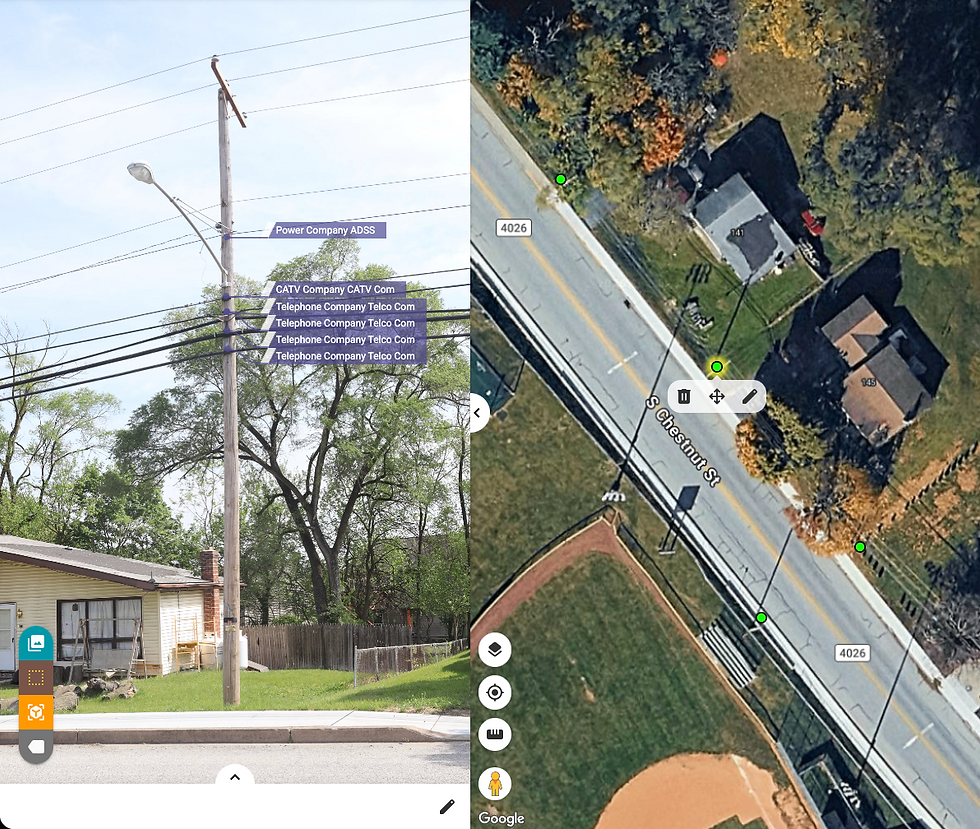
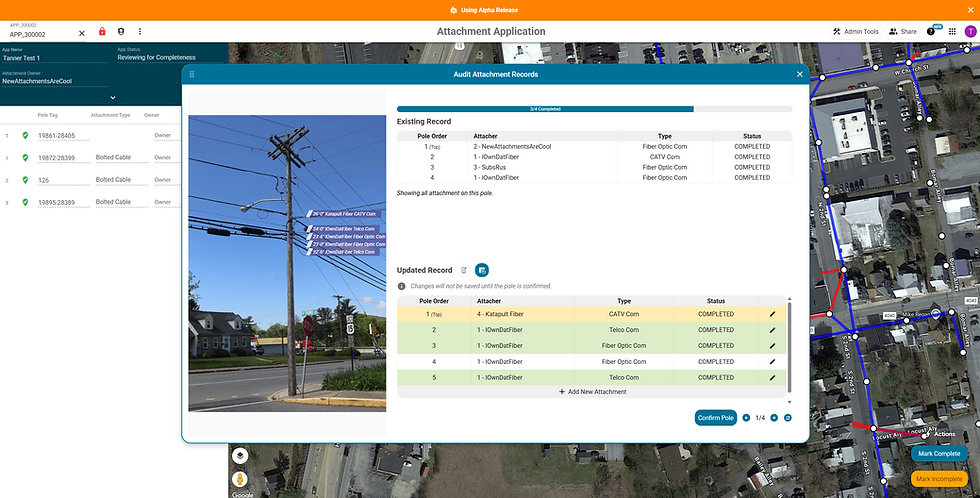
Most pole owners already have a baseline of attachment records and a working make ready program. An audit can build on that baseline instead of starting from zero. Two-person crews photo-document each pole rapidly from the vehicle, capturing a high-resolution, measurable image rather than stopping to physically hug every pole. The field cost stays low because the work is fast and safe, and the deliverable at most poles is simply an updated photo and confirmation that the existing record is accurate.
Solve each cable once, not each pole
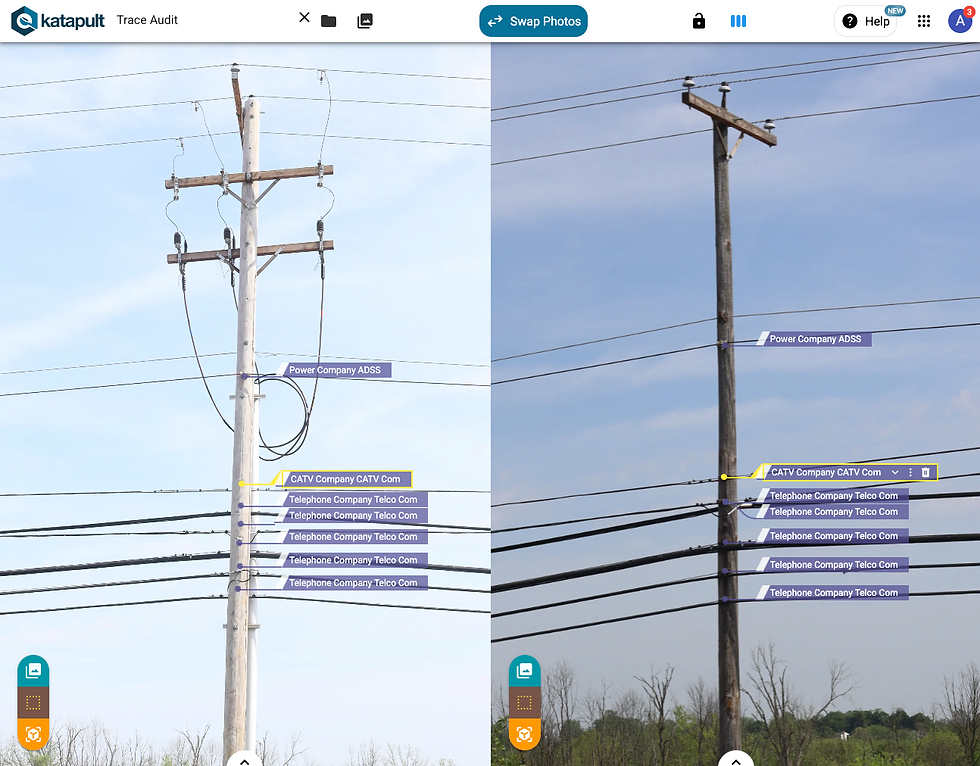
In the back office, attachments get traced through the network rather than identified pole by pole. When a line's owner is confirmed at one location, that identification backfills every pole in the run. In practice, a designer is not re-solving the same fiber line at forty poles in a row; they solve it once per cable and move on. That is the difference between an inventory that crawls and one that keeps pace with the field crews.
Drive each discrepancy to resolution through channels you already have
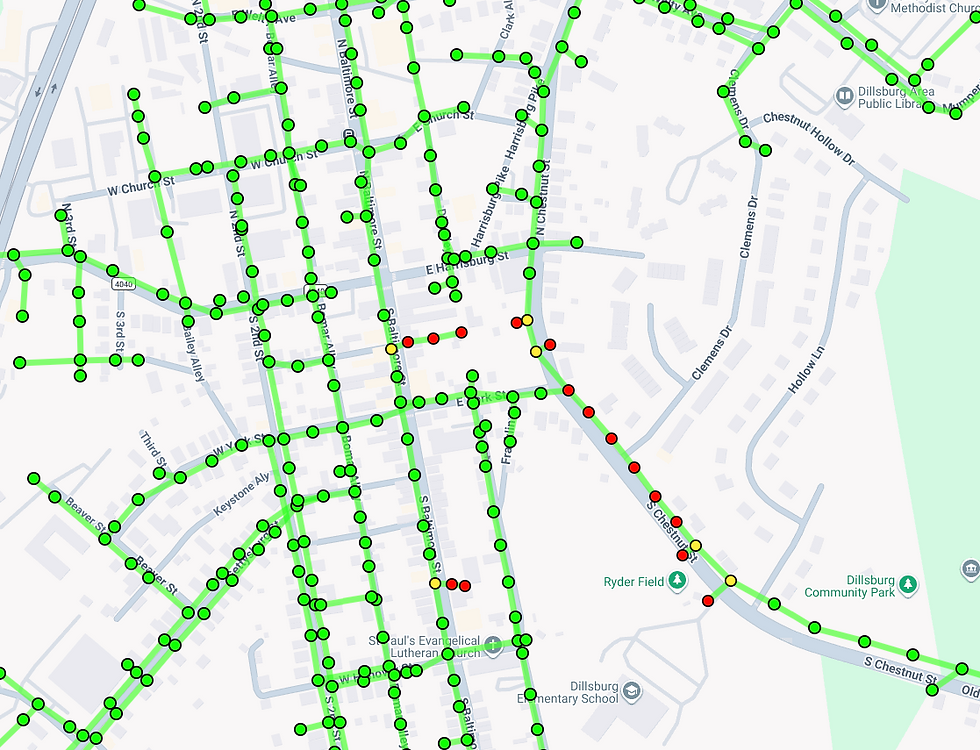
The point of the audit is not the count; it is resolution. Each discrepancy the inventory turns up falls into one of three buckets: a clerical error to correct in the records, an unauthorized attachment the owner agrees to remove, or an unauthorized attachment that goes through the make ready process to ensure safety and grid reliability. Virtual rideouts with each attacher, using the photo data, move those discrepancies to closure through the same removal and make ready channels the program already runs. Defensible photo evidence makes those conversations far less likely to turn into a fight.
Fund it from what it recovers
Because resolution generates real dollars, in recovered back rental and in make ready application fees, the audit can be structured to pay for itself. In a receivables-based approach, we invoice against the dollars the resolution recovers rather than asking for capital up front, and the invoice is designed never to exceed what comes in. That removes the single biggest barrier, because there is no large up-front number to defend in an O&M budget. The work is funded by the value it creates.
When you need to know who is on your poles and what they owe, the answer should come from one place: the photo-verified record your audit already produced.
What current records actually get you
When the records are current and defensible, the everyday work that depends on them gets easier. You can bill rental against counts you trust. You can hand an attacher a photo and a map instead of an argument. Pole relocations and storm restoration move faster because you know who is on each pole and how to reach them. And because the inventory leaves a recent photo at every pole, your staff and contractors can check conditions from their desk instead of rolling a truck. The mess of scattered records and unknown attachers turns into an organized, current picture of your system that keeps paying off long after the audit closes.
The double wood payoff
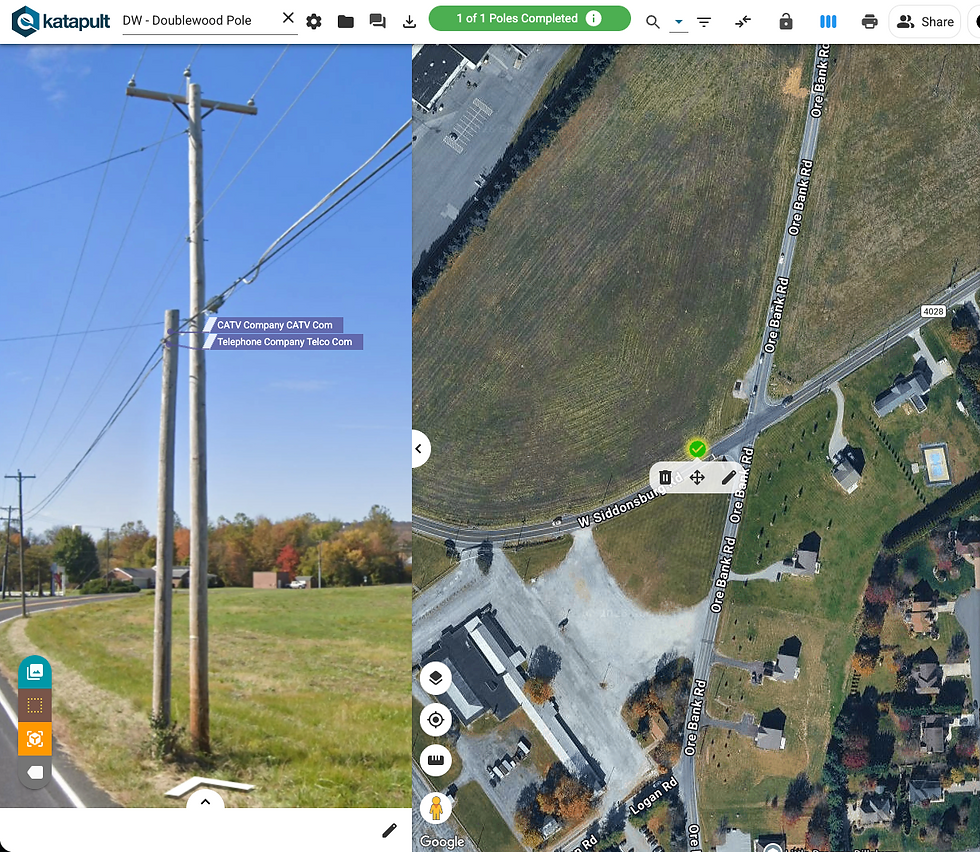
Current attachment records are also the fastest route to resolving double wood. The double or triple poles that sit for months or years, waiting on a transfer that never finished, are mostly a records problem: nobody is sure which poles are resolved and which still have attachments to move. The same field pass that confirms attachment counts can confirm the state of suspected double wood at those poles, so transfer tickets get created, updated, or closed based on what is actually in the field. As BEAD funding and aging-asset replacement push more pole replacements through the system, that backlog only grows, which makes accurate records worth more, not less. (For the mechanics of clearing a backlog once you have the data, see our double wood resolution workflow and how Transfer Management drives transfers to closure.)
What stale records cost you
Out-of-date attachment records are not just an administrative gap; they carry real risk. Unauthorized attachments skip the make ready and pole loading checks that keep poles within safe limits, which raises the odds of a failure in a storm. Relocation and restoration projects stall while crews track down plant owners who are not in the records. Rental revenue that could fund reliability work quietly goes uncollected. And the longer unauthorized attachments sit, the more make ready cost the pole owner absorbs that should have been the original attacher's responsibility. None of these show up as a line item, which is exactly why they are easy to keep deferring.
What an audit like this costs
The biggest driver of audit cost is whether crews can work rapidly from the vehicle or have to physically stand at every pole. A rapid, photo-first driveby is a fundamentally different cost than a survey-grade effort that confirms a tag or birthmark at each pole, so the first question to settle is how much certainty you actually need at the pole level. From there, the receivables-based structure changes the budgeting question entirely. Instead of asking what the audit costs up front, you are asking how much of the recovered rental and application revenue covers the work, with the rest staying with you. We are happy to walk through the specific economics for your footprint, including where a pilot makes sense before a full ramp.
Frequently asked questions
Is a pole attachment audit a capital project or an operations expense? For most utilities it lands in the operations and maintenance budget, because it documents existing assets rather than building or replacing them. That classification is a big reason these projects stall. A receivables-based structure sidesteps it by funding the work from recovered rental and application fees instead of an up-front capital request.
How accurate is a driveby audit compared with standing at each pole? A rapid, photo-first driveby typically yields submeter location accuracy and a complete, measurable photo of each pole, captured without entering the power space. It is not survey-grade GPS, and it does not confirm pole ownership by reading every tag. For attachment counts and billing, the photo record and cable tracing are what matter, and those hold up under scrutiny.
Do crews have to climb poles or use bucket trucks? No. The work is done from the ground using a photo-based method, so crews stay out of the power space. That keeps the field portion safe and fast, which is part of what keeps the cost low.
How do you identify unknown or "mystery" attachers? Most unknown attachments resolve through cable tracing: once a line's owner is confirmed anywhere along the run, every pole on that run is backfilled. For the rare line with no identification at all, we do the detective work, which can include calling local businesses along the route or sending a technician back for a closer look or to tie up any loose ends.
Can an attachment audit pay for itself? It can, when the audit is built around resolution. Recovered back rental and make ready application fees from unauthorized attachments generate real dollars, and a receivables-based invoice is designed never to exceed what comes in. We do not promise a specific recovery figure, because the number depends on what is actually on your poles, but the structure removes the up-front budget risk for the vendor.
How long does an audit take? It depends on footprint size and how you sequence it, but the field inventory moves quickly, often thousands of poles per crew per week, with back-office annotation following close behind. Resolution timelines depend on your agreements and how fast attachers respond. We usually recommend starting with a pilot of around a hundred poles to lock in the workflow before ramping.
What do we actually receive at the end? At minimum, updated attachment records and a recent, annotated photo tied to each pole, plus status and attacher maps you can act on. Every photo is linked to a specific pole, with a log of when it was collected, annotated, and resolved, which is what makes the records defensible for billing and regulatory review.
Does this help with permitting and applications too? Yes. The current records and photo data feed directly into the rest of the program, from pole permitting to the application visibility a healthy joint use program depends on. The audit is not a side project; it is the foundation the rest of the workflow stands on.
Getting an audit moving in your footprint
A pole attachment audit does not have to be a capital project that waits five years for budget, or a legal gamble over a few dollars per pole. Built around the records you already have, funded by what it recovers, and aimed at resolution rather than just a count, it becomes a continuous way to keep your records accurate and your grid documented.
We run this work on Katapult Pro and alongside utilities every day, so we can help you scope it honestly, start with a pilot, and ramp only when the throughput is there. If you own the poles or manage programs for the owner, let's talk through what an attachment audit would look like in your footprint.
.png?width=680&height=1008&name=pole-no-bg%20(1).png)